
31.5.12
Web development
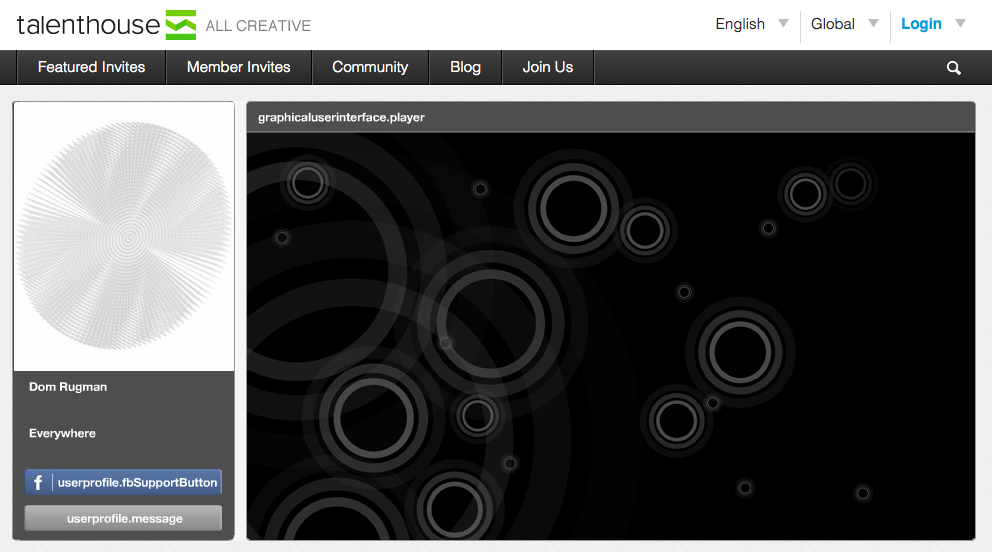
Website development, post session screen shots. Still havent got my Personal branding down yet, but I like some of the concepts I'm starting to think about here, with expanding navbar sections etc. Still some work to do though...
29.5.12


26.5.12




10.5.12
11.4.12


16.3.12
Business Cards
I've been thinking of trying to get a business card idea together for a week or so, trying to take a simple approach but encorporate a visually intriging element. A few of the smaller thumbnails below are some of my initial ideas, trying to communicate my email address through minimal type and image. I thought the square format could be interesting, not a completely original idea but a less common format after doing a bit of research...


It wasn't until I got emailing a lovely lady called Lucy (through a limited offer I found on twitter offering a free short run) that there started to become an urgancy to get a design together. So I took the designs I've been working on and applied them to the industry standard format for business cards, as this was the only restriction they had in place. The offer included 100 business cards on 350gsm card, I'm not sure of the quality of the stock but free is an offer I couldn't turn down. I got my artwork sent off yesterday and am looking forward to receiving the batch of cards.


End Of Work
As gifts to their clients and staff, Sydney based design studio ‘End
of Work’ produced a range of products such as wine bottles and tote
bags.
The packaging to house the products was made from industrial potato sacks, typographic lettering was screen printed onto the bottles, bags, tags and envelope sacks. Each envelope sack was individually hand stamped out to reveal the name and message to the recipient. They were sealed with de-bossed logo and singer sewn closed.
The packaging to house the products was made from industrial potato sacks, typographic lettering was screen printed onto the bottles, bags, tags and envelope sacks. Each envelope sack was individually hand stamped out to reveal the name and message to the recipient. They were sealed with de-bossed logo and singer sewn closed.
6.3.12
5's


5 facts in CV -
∆ I hel
∆ I drink a lot of Tea
∆ Current Practises
∆ No Spelling mistakes
∆ I've travelled to many
5 Self Statements -
∆ I am a graphic Designer
∆ I analyse everything visual, and how I could improve it.
∆ The thought of a new, exciting brief is better than Christmas
∆ I work to deadlines, well.
∆ I eventually want to be based in western Europe.
5 Practical Skills -
∆ ...are always evolving.
∆ I work well with my hands, across a variety of mediums.
∆ A confident set of software skills across different platforms
∆ Collaborating is a skill I value highly - work with as many people as possible (possibly not all at once)
∆ Confident in my delivery, enjoy talking.
5 Creative Skills -
∆
∆ I try to approach and appreciate briefs from a clients point of view.
∆ I love analysing and discussing peers work, aiming to contribute a constructive input.
∆ I have an eye for considered design,
∆ I embrace both printed and digital media, each in ways that feel appropriate.
5 Personal Qualities -
∆ I enjoy life.
∆ Work well collaboratively, throwing ideas back and forth to solve problems.
∆ Receive criticism well, take the positives from the negatives and act accordingly.
∆ Considerate and friendly.
∆ I can
Contact Details -
Address-
Dominic Rugman
155b Otley Rd
Headingly
Leeds
LS6 3QG
Email -
Domrugman@gmail.com
Website -
?
Phone Number -
+44 (0)7504952336
28.2.12


25.2.12
Idents
In order to round off the visuals of our presentation, we want something visually engaging that surpasses the simplicity of pure image. As we are proposing to work closely alongside the music industry, it only felt apt to create some kind of motion graphic to accompany our pitch. Moving image is a strong force within the music scene, with all major songs often having a visual partner, more so when aired on TV etc.
On top of this, alot of online music platforms are starting to use these ident style videos in promoting themselves, be it at the begining of a song or just generally in an online environment.
I spent the best part of a day prodcing numerous versions, and although the sound isn't perfectly in sync (i couldn't find the track I wanted to use in high quality!!) but I was quite happy with these three outcomes specifically...

On top of this, alot of online music platforms are starting to use these ident style videos in promoting themselves, be it at the begining of a song or just generally in an online environment.
I spent the best part of a day prodcing numerous versions, and although the sound isn't perfectly in sync (i couldn't find the track I wanted to use in high quality!!) but I was quite happy with these three outcomes specifically...

24.2.12
20.2.12
Task 5
I have a strong ambition to work within the fashion industry, taking a logical approach to branding & identity, competing to get design work for high-end, bespoke clothing labels.
I need to develop a broad understanding of exactly how graphic design functions within the fashion industry in order to have a competitive edge. This will come through visits, research and involving myself in the graphically aware fashion world.
Collaboration is key to ensure the channelling of fresh, innovative ideas. Based on past collaborative briefs I feel I work well in a team, much like the ones found in a studio environment.
Motion graphics is an element of my design practise I want to keep close to. Fashion exhibitions, advertisements, lookbooks/reels are distributed in all types of media today, in order to hold a competitive stance I will need to offer a techincally strong and diverse skill set.
My conceptual thinking is strong, and confined within a studio space with other creative individuals to bounce ideas around is my ideal process. It is an aspect of my practise that is less tangible and therefore needs to be highlighted in other ways, usually through meeting and communicating with potential clients/employers.
Web design is another area, although currently lacking in skill, it is imperative I can communicate a brands identity and message across all media in order to become employable over competing designers/studios.
I need to be unique and can only be so through creativity. Printed/tangible media is a direct physical example of how one can be creative within design. Fashion generally is quite an intimate subject matter, of which practitioners are usually aware of design, particularly when it is executed well.
In order to promote myself I need to take a very professional approach in putting together a website and self promotional material. As mentioned before it needs to be strong visually and translate from printed to digital media in order to brand myself with the intentions of attracting serious clients.
I need to develop a broad understanding of exactly how graphic design functions within the fashion industry in order to have a competitive edge. This will come through visits, research and involving myself in the graphically aware fashion world.
Collaboration is key to ensure the channelling of fresh, innovative ideas. Based on past collaborative briefs I feel I work well in a team, much like the ones found in a studio environment.
Motion graphics is an element of my design practise I want to keep close to. Fashion exhibitions, advertisements, lookbooks/reels are distributed in all types of media today, in order to hold a competitive stance I will need to offer a techincally strong and diverse skill set.
My conceptual thinking is strong, and confined within a studio space with other creative individuals to bounce ideas around is my ideal process. It is an aspect of my practise that is less tangible and therefore needs to be highlighted in other ways, usually through meeting and communicating with potential clients/employers.
Web design is another area, although currently lacking in skill, it is imperative I can communicate a brands identity and message across all media in order to become employable over competing designers/studios.
I need to be unique and can only be so through creativity. Printed/tangible media is a direct physical example of how one can be creative within design. Fashion generally is quite an intimate subject matter, of which practitioners are usually aware of design, particularly when it is executed well.
In order to promote myself I need to take a very professional approach in putting together a website and self promotional material. As mentioned before it needs to be strong visually and translate from printed to digital media in order to brand myself with the intentions of attracting serious clients.
18.2.12
Task 3
The fashion industry is very diverse in media, not only in the way it communicates/advertises its products to customers, but the way it builds an aura around certain scenes and ranges when and where they get released. Social networking has been at the forefront of this for many years, making use of blogs and online media to ensure the widest possible range of publicity can be achieved. For some it is a case of finding a specific demographic to appeal to and thrive in, for others a simple case of achieving ultimate sales and profit.
My potential customers would be the brands reaching out to average fashion conscience customer through design and communication, essentially putting me in the driving seat of this journey from post production to the final sale. So how will I promote myself to these companies looking to increase sales and/or home-in-on a certain target market, be it higher end boutiques ie. Berg&Berg or more general fashion outlets such as Topshop.

 What do THEY want to hevevWhat do they want to hear?They want to hear that I have an adequate level of understanding how the fashion market works, and although I pledge not to be so fashion conscious, it's clear when a campaign is trying to target audiences for specific reason, be it price, style or geographical relevance.
 A young mind, interested in how the brands image can be pushed forward in any direction that will bring them further in tune with their target demographic, again, this depends on the nature of the brand and how they want themselves to be perceived through advertising campaigns, even something as simple as a logo can connote the ethics of a brand, an aspect that young/current designers can be very much in tune with. More specifically, being able to identify a clients tone of voice and how this can be expanded on/experimented with to either attract new customers or reinforce the fellowship of others.
What should I say to them?
How will I communicate to them?
Regardless of who I am communicating to initially, there are a number of ways I would want to start communicating to potential clients. Personal Selling is a big factor, I want to sell myself in a way that clients will not only be intrigued by the work I am producing, but interest them in finding out how they can work with me in order to sell themselves better.
A personal website/portfolio is a must in getting oneself out there in the world of graphic design, especially where fashion is concerned. As I mentioned earlier, a whole load of fashion orientated projects/adverts/blogs/websites/shops circulate online, and some solely online, therefore limiting their means of communication to specific audiences. This gives me the opportunity to penetrate certain customers at the heart of their business, providing I have a strong enough online presence.

Last year I went to the London Clothes Show (through interest of my better half), essentially a trade fair for some of the bigger brand names, but also those who work on a lower level output. The brands found here often have a strong idea of who they want to target and leave themselves exposed for customers to browse, buy or discard what they have to offer. Attending events like these and talking to the right people will undoubtedly put me in a potentially creative atmosphere, offering advice on design aesthetics and how they could better their communication with the target market.
Business cards/handouts get passed around these kind of events like there is no tomorrow, but actually talking to potential clients and leving them woth something to think about as well as a small piece of informed design to let them know who you are and what you can offer is much more effective in building up relationships with clients, hopefully leaving a mark in their mind and more importantly a contact in their phonebook.
Direct mail/mailshots can be a risky way of communication, purely because of the stick they get given under the bracket of 'junk mail'. In order to effectively communicte via mail, (particularly to bigger compaines) it is essentail that the design is considered down to the envelope used to package what you want to say.
17.2.12
Task 2
Where are my clients/ employers located?
My potential clients/employers are vast, as the fashion arena is a global market found within every country and culture. This provides many avenues for myself to venture down. The potential clients/employers are endless.
The Employer
In an ideal world my future employer will be for and independent design studio, this will allow me to continuously adapt my style to different clients and fulfil different briefs. This will mean that I will not always be focusing on one given brand message and allow me to work with different types of clients all over the world. Through my research, alot of studios I have started to become more interested / could see myself working in are essentially located in and around Western Europe. Apart from the fact their aesthetic styles are very much the kind of work I could see myself producing, alot of their design principles are true to those of my own.
The Clients
The mass market including High End/Designer- These are usually located within several different countries and the messages portrayed will have to be adaptable across all cultures e.g. H&M who can be found across the whole of Europe, some Asian Countries and the US. Others may be country specific e.g. Topshop which can be found all over the UK but is limited abroad. All of these will want to have their identity and message portrayed through multiple forms of media.
Independent retailers -These are usually locally based in a specific town/cities. Again each and every country will have its own independent fashion retailers however none will be the same and each will have its own USP to project how they want their brand to be received by its consumer.
I am drawn to are the higher end markets and the independent retailers where one doesn't have to limit design creativity to appeal to a mass market, instead appealing to a specific demographic - often more appreciative of the whole delivery/experience of a product.


Media my potential Clients/employers use?
Within graphic design for fashion, the element I like the most is that a brand image needs to be consistent and continuously reinforce the same message throughout every media. The idea behind all fashion media is that you need to play off consumers emotions to entice them to buy, as fashion is something that people want in order to portray themselves in a certain light.
My future clients/employers will use a considerable amount of printed & online media to get their message across. They will have a strong focus on publishing (magazine campaigns, look books etc.) but an online presence has become an essential part in today’s society.
The various forms of media that my future client/employers will need are:-
 • Swing tags
• Bags
• Logos
• Advertising – TV / posters
• Overall shop image
• Packaging
• Online
• Magazine
• Photography
• Social Media sites
• Moving Image
• Apps
What do you need to communicate and how does it match your employers/clients need?
I need for my employer and clients the following:-
• Flexibility within how I respond to a brief, but still incorporating my own personal style. A unique style that I can flex to the specific client without losing who I am, as a designer.
• Knowledge of various different types of media, and how to apply these in an appropriate manor. This will be especially important to get across as, as a designer I will be working closely alongside all areas of a brands delivery and need to show that I have a good range of understanding and that I can achieve a fluent outcome across all types of media.
• That I can provide solutions to problems – this will always be something my future employers will look for as this is the nature of graphic designs and providing solutions for your client.
• Consistency in producing commercial, accurate and unique work. Simple yet effective.
• For some clients the knowledge of cost can have a huge impact into their decision about a designer, therefore I need to make sure I provide affordable solutions so that they are getting what they want for the best possible price.
PEST decisions affecting their use of graphic design, choice of designer and trends that will influence their decisions regarding graphic design
Politics /legal
Working with global companies means that I will have to provide an idea that can be easily placed into any given country without causing political stances or projecting inappropriate messages to certain cultures.
Economical
Impact of costs on a business – providing affordable solutions
Social/environments
It will be crucial for every design I do to be up on the latest trends within the graphics arena as well as the fashion one. I will have to show an in depth knowledge of all the up and coming artists, designers, mediums, font, styles etc.
Environmentally friendly solutions/Technological.
This will form a vital part of the decision making. Competence in all areas will be vital to be successful in the fashion industry as one will have to always be working with various media.
Another area of importance is the knowledge of online presence and how this can be manipulated to target different audiences. For example social media networking is vital these days to target the younger generations. So by being familiar with sites such as twitter, facebook and tumblr, messages can get across to the younger/future audience.
BERG&BERG.


how the clients location and media effect what needs to be communicated to them and how you may go about doing this.
Focusing on Berg&Berg, it is quite obvious they are a higher end fashion retailer focusing on high quality products and a very strong brand message. 'Our goal is that every Berg & Berg product will become a trusted friend in your wardrobe: loved, cared for and enjoyed for many years to come'. This message resounds throughout the entirety of their brand experience, be it their website, products or business cards, even down to the stationary.
Based in Italy, they are at the epicentre of fashion with a considerable volume of exposure in very popular magazines such as ELLE and Monocle, - a Norwegian business daily lifestyle magazine. In terms of thinking about how I, myself would go about contacting a client of this nature there are a certain number of immediate issues - Based in italy, a quick visit would most likely be out of the equation, but they do have a very strong online presence, constantly updating their blog and running an online store. E-mail contact is common practise, however, such a high end brand, focused on perfect simplicity would most likely respond to something a bit more special. Maybe a letter, seeing as it's a classic and art, would appeal to the senses of these presumably quite intellectual directors.
My potential clients/employers are vast, as the fashion arena is a global market found within every country and culture. This provides many avenues for myself to venture down. The potential clients/employers are endless.
The Employer
In an ideal world my future employer will be for and independent design studio, this will allow me to continuously adapt my style to different clients and fulfil different briefs. This will mean that I will not always be focusing on one given brand message and allow me to work with different types of clients all over the world. Through my research, alot of studios I have started to become more interested / could see myself working in are essentially located in and around Western Europe. Apart from the fact their aesthetic styles are very much the kind of work I could see myself producing, alot of their design principles are true to those of my own.
The Clients
The mass market including High End/Designer- These are usually located within several different countries and the messages portrayed will have to be adaptable across all cultures e.g. H&M who can be found across the whole of Europe, some Asian Countries and the US. Others may be country specific e.g. Topshop which can be found all over the UK but is limited abroad. All of these will want to have their identity and message portrayed through multiple forms of media.
Independent retailers -These are usually locally based in a specific town/cities. Again each and every country will have its own independent fashion retailers however none will be the same and each will have its own USP to project how they want their brand to be received by its consumer.
I am drawn to are the higher end markets and the independent retailers where one doesn't have to limit design creativity to appeal to a mass market, instead appealing to a specific demographic - often more appreciative of the whole delivery/experience of a product.


Media my potential Clients/employers use?
Within graphic design for fashion, the element I like the most is that a brand image needs to be consistent and continuously reinforce the same message throughout every media. The idea behind all fashion media is that you need to play off consumers emotions to entice them to buy, as fashion is something that people want in order to portray themselves in a certain light.
My future clients/employers will use a considerable amount of printed & online media to get their message across. They will have a strong focus on publishing (magazine campaigns, look books etc.) but an online presence has become an essential part in today’s society.
The various forms of media that my future client/employers will need are:-
 • Swing tags
 • Bags
• Logos
• Advertising – TV / posters
• Overall shop image
• Packaging
• Online
• Magazine
• Photography
• Social Media sites
• Moving Image
• Apps
What do you need to communicate and how does it match your employers/clients need?
I need for my employer and clients the following:-
• Flexibility within how I respond to a brief, but still incorporating my own personal style. A unique style that I can flex to the specific client without losing who I am, as a designer.
• Knowledge of various different types of media, and how to apply these in an appropriate manor. This will be especially important to get across as, as a designer I will be working closely alongside all areas of a brands delivery and need to show that I have a good range of understanding and that I can achieve a fluent outcome across all types of media.
• That I can provide solutions to problems – this will always be something my future employers will look for as this is the nature of graphic designs and providing solutions for your client.
• Consistency in producing commercial, accurate and unique work. Simple yet effective.
• For some clients the knowledge of cost can have a huge impact into their decision about a designer, therefore I need to make sure I provide affordable solutions so that they are getting what they want for the best possible price.
PEST decisions affecting their use of graphic design, choice of designer and trends that will influence their decisions regarding graphic design
Politics /legal
Working with global companies means that I will have to provide an idea that can be easily placed into any given country without causing political stances or projecting inappropriate messages to certain cultures.
Economical
Impact of costs on a business – providing affordable solutions
Social/environments
It will be crucial for every design I do to be up on the latest trends within the graphics arena as well as the fashion one. I will have to show an in depth knowledge of all the up and coming artists, designers, mediums, font, styles etc.
Environmentally friendly solutions/Technological.
This will form a vital part of the decision making. Competence in all areas will be vital to be successful in the fashion industry as one will have to always be working with various media.
Another area of importance is the knowledge of online presence and how this can be manipulated to target different audiences. For example social media networking is vital these days to target the younger generations. So by being familiar with sites such as twitter, facebook and tumblr, messages can get across to the younger/future audience.
BERG&BERG.


how the clients location and media effect what needs to be communicated to them and how you may go about doing this.
Focusing on Berg&Berg, it is quite obvious they are a higher end fashion retailer focusing on high quality products and a very strong brand message. 'Our goal is that every Berg & Berg product will become a trusted friend in your wardrobe: loved, cared for and enjoyed for many years to come'. This message resounds throughout the entirety of their brand experience, be it their website, products or business cards, even down to the stationary.
Based in Italy, they are at the epicentre of fashion with a considerable volume of exposure in very popular magazines such as ELLE and Monocle, - a Norwegian business daily lifestyle magazine. In terms of thinking about how I, myself would go about contacting a client of this nature there are a certain number of immediate issues - Based in italy, a quick visit would most likely be out of the equation, but they do have a very strong online presence, constantly updating their blog and running an online store. E-mail contact is common practise, however, such a high end brand, focused on perfect simplicity would most likely respond to something a bit more special. Maybe a letter, seeing as it's a classic and art, would appeal to the senses of these presumably quite intellectual directors.
16.2.12
Rethink

After a discussion into how feasible living in manchester whilst renting a full time studio is, we debated whether or not it was worth it in our first year of business.
Setting up base in a nicer house/area, maybe trying to get hold of a 5 bedroom house with a loft conversion/extra large room to set up a studio/working area in would be a lot more finanically viable whilst initially starting up the business. This in mind, a business loan/grant would go a lot further in terms of equipment, quality of living and being able to provide a high quality level of design. That said, it doesn't mean we can increase our expendature massively, but maybe crop back on the loans/grants we recieve and hopefully start turning over a profit, or breaking even quicker.
13.2.12

12.2.12
Manchester Studios


RetroFuzz is a Manchester-based independent web design agency, working predominantly in the music industry.
They are a small, dedicated and hard-working company. The team is nine strong and comprised of a mix of young web designers and programmers, all passionate about music, youth culture and new technology.
As a company they strongly believe in doing things "the right way" from the users perspective. The quality and volume of our work has gained us a strong reputation throughout the music industry and beyond - securing regular work from all four major labels, most of the larger independents and several artist management companies through word of mouth alone, without any self promotion.

9.2.12
Private / Limited?
I looked into the differences between setting ourselves up as a private or limited company, at first it was all rather confusing, with public shareholders owningthe business etc. I gathered a few of these personal responses to the differences between the two, but were still very vague.
What is difference between pvt ltd company and ltd company?
1. Pvt. ltd is wholly private follow the rules and regulation of govt.
but implement as its own rules, where as LTD company simply follow the
govt rules and implement as per govt.
2. In Private CEO/ chairman is the owner of the co. where as in LTD there have a govt appoint person.
3. In Ltd u got bonus/ gratuity and other benefits where as pvt have some restriction from them.
4. In Ltd u got leave per year where as in pvt no work no pay.
2. In Private CEO/ chairman is the owner of the co. where as in LTD there have a govt appoint person.
3. In Ltd u got bonus/ gratuity and other benefits where as pvt have some restriction from them.
4. In Ltd u got leave per year where as in pvt no work no pay.
In a private limited company number of share holders is between 7 to 50
whereas in public limited company number should be minimum 7 but for
maximum there is no limit. Both private limited as well as public
limited companies need to make their own working guide lines/rules and
in the form of memorandum and articles of association need to get these
registered with registrar of companies which has office in the capital
of each state where company is going to get it self operative/working.
Private Limited is a fully owned company by group of promoters. All
shares of the company are in private hands. In Limited Company, which is
in fact Public Limited, who's owners are Public, and shares are open to
to anyone to buy and sell and keep it. Maximum share holder runs the
company, as per Company Law.
Company Obligations
The term ‘limited company’ includes several different company types,
including Private Limited Companies (Ltd), Public Limited Companies
(PLC), and Limited Liability Partnerships (LLP).
All limited companies are must submit their annual accounts to
Companies House each year, and complete an Annual Return – Form
AR01(which contains fundamental information about your company).
You are also obliged to inform Companies House of any changes in
company details (such as change of registered address, change in the
share structure of the company, and any change in director(s) or company
secretary details.
After visiting the 'UKBUSINESSLAB.CO.UK', I found a source explaining 'A private limited company advantages versus sole trader basic accounts' I know we wouldn't operate on a sole trader basis, but it did highlight the benefits of working as a private limited company. Also, looking at other sources and business', the majority of small setups run as private limited companies, suggesting for us as a small entity it would be the right direction head in.
A private limited company advantages and disadvantages compared with
retaining sole trader status extends beyond purely tax advantages. There
are other private limited company advantages and also disadvantages
particularly in regard to limited company accounts and administration
compared to producing a simple set of sole trader basic accounts.
A private limited company advantages include:
1. Limitation of Liability
There is no distinction between business money and personal money for anyone self employed as all business debts are the personal respon
sibility of the sole trader. The private limited company
advantages are that the company is a separate corporate body and
liability for payment of debts stops with the pvt ltd company, the
owners, shareholders are not personally liable. The directors are only
liable if they continue to trade and incur liabilities after it becomes
apparent the ltd company is insolvent.
2. Lower Taxes
Lower corporation tax offered a private limited company advantages over self employment in recent years. The £10,000 tax free limit was cancelled several years ago. Corporation tax rates have increased from 20 per cent to 22 per cent for small ltd companies over the last three years compared with the basic rate tax for a sole trader which has reduced from 22 per cent to 20 per cent Incorporation does still offer tax saving advantages dependent upon the net profit before tax.
The private limited company advantages come from the flexibility of being able to determine the proportions of salary and dividends taken compared with a sole trader whose basic accounts are subject to tax at fixed tax rates and thresholds.
A sole trader receives a £6,035 personal allowance and pays basic rate tax of 20 per cent on the next £34,800 of earnings up to the higher threshold limit and 40 per cent tax thereafter. Class 4 national insurance is 8 per cent of earnings up to the upper primary threshold and 1 per cent thereafter.
Dividends are taxed at 10 per cent on total income up to the higher threshold and 32.5 per cent above. The dividend is a distribution of company profit after corporation tax has been deducted and so the shareholder also receives a dividend tax credit from the pvt ltd company of 10 per cent.
There are significant private limited company advantages regarding tax liability compared to a sole trader where net income is below the upper earnings threshold.
For example assuming the limited company net profit before salary is £35,000. A sole trader would pay income tax of £5,793 plus national insurance of £2,317.20, a total of £8,107.20.
If a salary of £6.035 is taken and the rest is taken in dividends a private limited company would pay £6,372.30 corporation tax, after deducting the salary from net taxable profit and the sole trader now the shareholder would pay no income tax.
The advantages increase where net taxable profit is above the self employment upper earnings limit as money can be left in the business and therefore only subject to the 22 per cent corporation tax rate thereby avoiding the sole trader 40 per cent tax rate. Another possibility is to distribute the shares among family members to reduce the risk of 40 per cent tax.
3. Limited Company accounts and Sole Trader basic accounts
Sole trader basic accounts can be quite simple as a formal accounting system is not required and can be reduced to simple lists of income and expenditure supported by documentary evidence of sales and purchase invoices, effectively single entry bookkeeping. Producing a balance sheet is optional. Due to the simplicity then an accountant may not be required saving a significant cost.
Ltd company accounts have to use double entry bookkeeping to produce the year end accounts including a balance sheet with statutory notes and statements. Unless accounting software is employed to produce the company accounts in this format then accounting knowledge is required and an accountants fee may well be in the region of £500 to £1,000. An accountant is not essential for a small pvt ltd company but is the normal approach and offsets some of the tax advantages.
4. Additional financial considerations
Because a director is also officially an employee of the pvt ltd company this gives rise to a number of considerations in determining the extent of a private limited company advantages.
Pension contributions of a sole trader are personal and while may be deducted from the personal income liability do not form part of the basic accounts. The pension costs including any company contribution to a pension scheme by a private limited company is a deductible business expense as an employee cost.
Using a car for business purposes may have an impact. The sole trader basic accounts would include the business proportion of the vehicle running costs or the mileage allowance. If that vehicle is used by a director then that director is receiving a taxable benefit potentially resulting in a higher tax burden depending upon the type of vehicle as taxable benefits vary. An alternative may be to leave the company vehicle privately owned and the director claim mileage allowances rather than vehicle running costs.
Potentially small issues but there differences in the accounting treatment of deductible expenses such as charitable donations, entertaining expenses and use of home as office. A private limited company advantages consist of being able to claim such expenses as valid business expenses which would not be claimable in the sole trader basic accounts as treated as personal not business.
If the director and main shareholder have other associated companies then the corporation basic tax rate could be affected.
5. Administration, management and business standing
A sole trader basically pleases themselves with regard to the administration and management of the business. A company director is responsible for adhering to company administration according to statutory regulations in regard to both the limited company accounts, statutory books and management as stated in the articles of association. The duties of a director are more formal than a sole trader.
Forming a private limited company is an indication that a business is both serious, has a long term objective and is correctly managed. This psychological perception can increase the business standing of a business. In addition funding requirements are more likely to be met as the lender to a sole trader has to consider the absence of a balance sheet statement in the basic accounts and the financial influences personally affecting the sole trader. A private limited company advantages concern the published financial statements, protection of the financial position from personal influences and the option of increasing security by virtue of asking directors to provide additional personal guarantees.
A private limited company advantages over self employment also extends to long term finance. Companies tend to retain more funds within the business to meet future financial commitments which aids year on year growth, a more sustainable business and medium term profits growth over a sole trader.
2. Lower Taxes
Lower corporation tax offered a private limited company advantages over self employment in recent years. The £10,000 tax free limit was cancelled several years ago. Corporation tax rates have increased from 20 per cent to 22 per cent for small ltd companies over the last three years compared with the basic rate tax for a sole trader which has reduced from 22 per cent to 20 per cent Incorporation does still offer tax saving advantages dependent upon the net profit before tax.
The private limited company advantages come from the flexibility of being able to determine the proportions of salary and dividends taken compared with a sole trader whose basic accounts are subject to tax at fixed tax rates and thresholds.
A sole trader receives a £6,035 personal allowance and pays basic rate tax of 20 per cent on the next £34,800 of earnings up to the higher threshold limit and 40 per cent tax thereafter. Class 4 national insurance is 8 per cent of earnings up to the upper primary threshold and 1 per cent thereafter.
Dividends are taxed at 10 per cent on total income up to the higher threshold and 32.5 per cent above. The dividend is a distribution of company profit after corporation tax has been deducted and so the shareholder also receives a dividend tax credit from the pvt ltd company of 10 per cent.
There are significant private limited company advantages regarding tax liability compared to a sole trader where net income is below the upper earnings threshold.
For example assuming the limited company net profit before salary is £35,000. A sole trader would pay income tax of £5,793 plus national insurance of £2,317.20, a total of £8,107.20.
If a salary of £6.035 is taken and the rest is taken in dividends a private limited company would pay £6,372.30 corporation tax, after deducting the salary from net taxable profit and the sole trader now the shareholder would pay no income tax.
The advantages increase where net taxable profit is above the self employment upper earnings limit as money can be left in the business and therefore only subject to the 22 per cent corporation tax rate thereby avoiding the sole trader 40 per cent tax rate. Another possibility is to distribute the shares among family members to reduce the risk of 40 per cent tax.
3. Limited Company accounts and Sole Trader basic accounts
Sole trader basic accounts can be quite simple as a formal accounting system is not required and can be reduced to simple lists of income and expenditure supported by documentary evidence of sales and purchase invoices, effectively single entry bookkeeping. Producing a balance sheet is optional. Due to the simplicity then an accountant may not be required saving a significant cost.
Ltd company accounts have to use double entry bookkeeping to produce the year end accounts including a balance sheet with statutory notes and statements. Unless accounting software is employed to produce the company accounts in this format then accounting knowledge is required and an accountants fee may well be in the region of £500 to £1,000. An accountant is not essential for a small pvt ltd company but is the normal approach and offsets some of the tax advantages.
4. Additional financial considerations
Because a director is also officially an employee of the pvt ltd company this gives rise to a number of considerations in determining the extent of a private limited company advantages.
Pension contributions of a sole trader are personal and while may be deducted from the personal income liability do not form part of the basic accounts. The pension costs including any company contribution to a pension scheme by a private limited company is a deductible business expense as an employee cost.
Using a car for business purposes may have an impact. The sole trader basic accounts would include the business proportion of the vehicle running costs or the mileage allowance. If that vehicle is used by a director then that director is receiving a taxable benefit potentially resulting in a higher tax burden depending upon the type of vehicle as taxable benefits vary. An alternative may be to leave the company vehicle privately owned and the director claim mileage allowances rather than vehicle running costs.
Potentially small issues but there differences in the accounting treatment of deductible expenses such as charitable donations, entertaining expenses and use of home as office. A private limited company advantages consist of being able to claim such expenses as valid business expenses which would not be claimable in the sole trader basic accounts as treated as personal not business.
If the director and main shareholder have other associated companies then the corporation basic tax rate could be affected.
5. Administration, management and business standing
A sole trader basically pleases themselves with regard to the administration and management of the business. A company director is responsible for adhering to company administration according to statutory regulations in regard to both the limited company accounts, statutory books and management as stated in the articles of association. The duties of a director are more formal than a sole trader.
Forming a private limited company is an indication that a business is both serious, has a long term objective and is correctly managed. This psychological perception can increase the business standing of a business. In addition funding requirements are more likely to be met as the lender to a sole trader has to consider the absence of a balance sheet statement in the basic accounts and the financial influences personally affecting the sole trader. A private limited company advantages concern the published financial statements, protection of the financial position from personal influences and the option of increasing security by virtue of asking directors to provide additional personal guarantees.
A private limited company advantages over self employment also extends to long term finance. Companies tend to retain more funds within the business to meet future financial commitments which aids year on year growth, a more sustainable business and medium term profits growth over a sole trader.
Subscribe to:
Posts (Atom)